D3 |A tale of two kitchens
When Jane and Gordon Watson purchased their five-bedroom Victorian terraced home in Earl’s Court, they were clear that the renovation needed to go far beyond cosmetic change. The house had not been updated for decades, and a full overhaul presented an opportunity to rethink how the spaces worked on a day-to-day basis, shaping the layout around how they actually live.
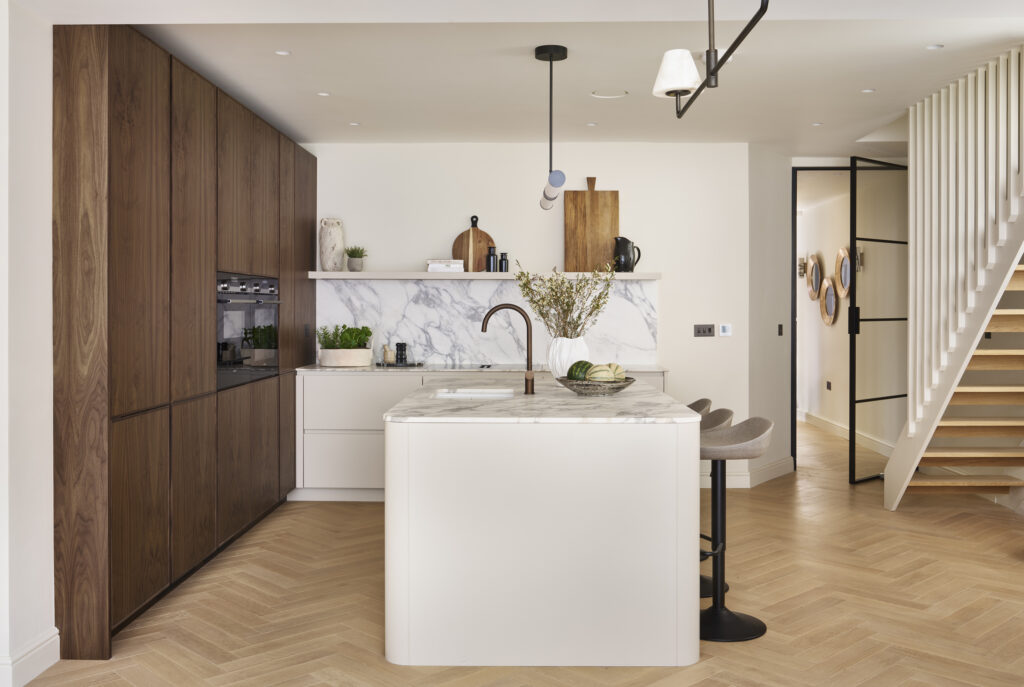
Central to this reconfiguration was the decision to create not one but two kitchens, each serving a distinct purpose within the home. An extension to the lower ground floor allowed for a generous, open kitchen that opens directly onto the garden, designed as a sociable space for entertaining throughout the year. With friends and family naturally gravitating towards the kitchen, the brief was to create a room that could comfortably accommodate larger gatherings, with sliding doors that could be thrown open in the warmer months to extend the space outdoors.
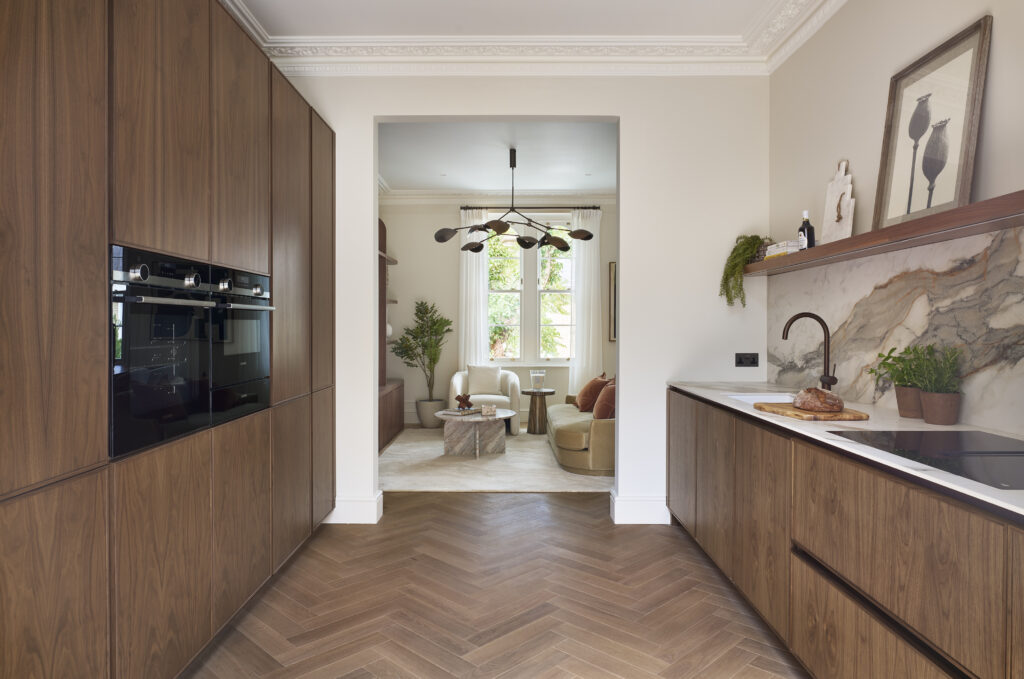
Alongside this, a second kitchen was introduced on the first floor, positioned next to the living room and new roof terrace overlooking the garden. Used primarily during the week, this more compact kitchen supports everyday cooking, tea breaks and snacks, particularly convenient for Jane when working from her home office above.
Following a recommendation, Jane approached Davonport to design both kitchens, with a clear desire for cohesion between the two spaces. A shared palette of materials ensures a visual connection, while allowing each kitchen to respond to its setting and role within the house. Neutral tones and the warmth of natural wood underpin both schemes, creating rooms that feel calm, welcoming and easy to live with.
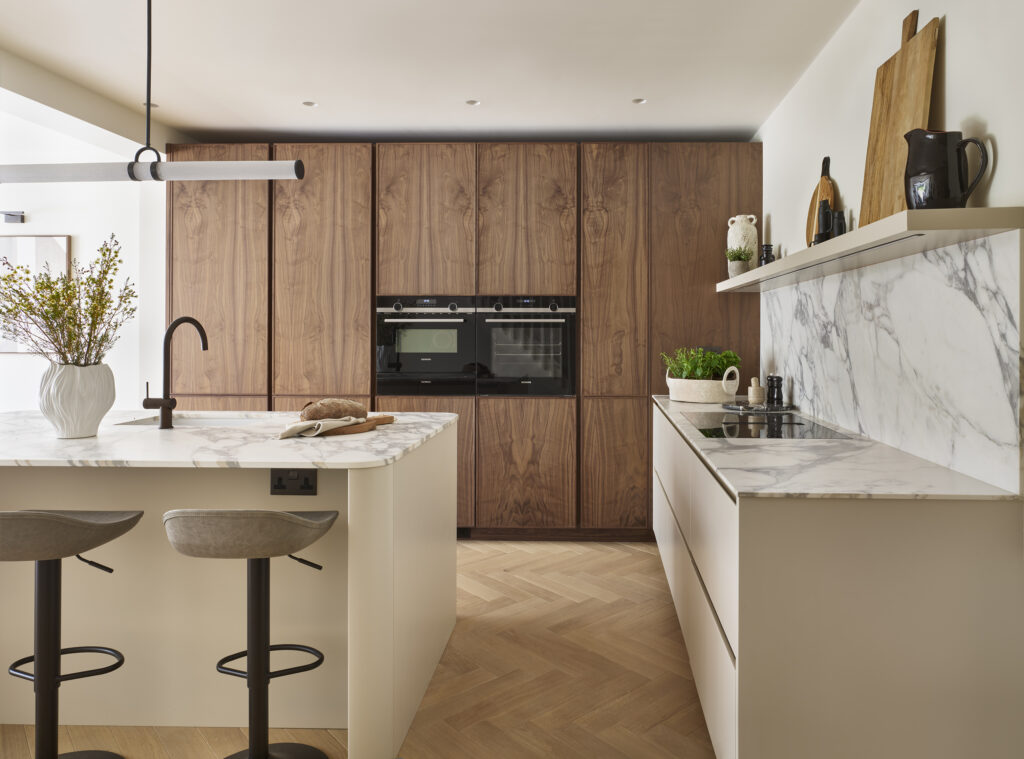
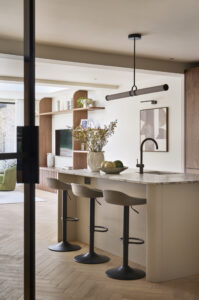
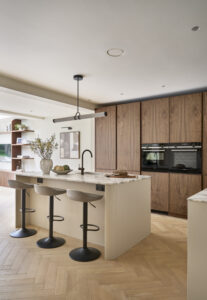
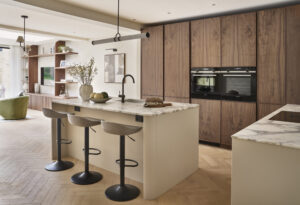
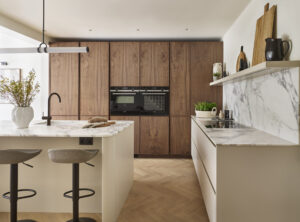
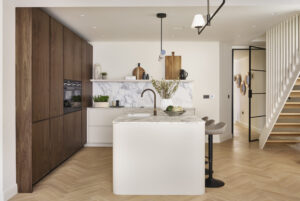
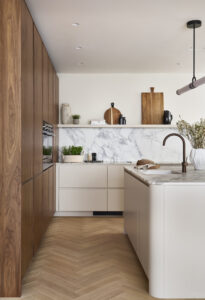
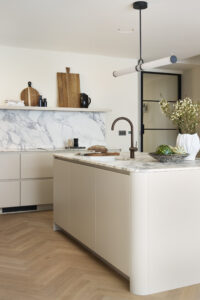
In the main kitchen, a striking run of tall walnut Micro Shaker cabinetry forms a defining feature. Designed to be handleless, the doors allow the natural beauty of the timber to take centre stage while housing a full suite of integrated Siemens appliances, including ovens, a combination microwave, warming drawer and fridge, with additional freezer storage built beneath. This richness is offset by a pared-back island and base run, spray painted in Farrow & Ball Shaded White, lending the space a softer, lighter presence. Although traditionally made, the furniture has a contemporary edge, achieved through slender door frames, streamlined detailing and subtle curved pilasters on the island.
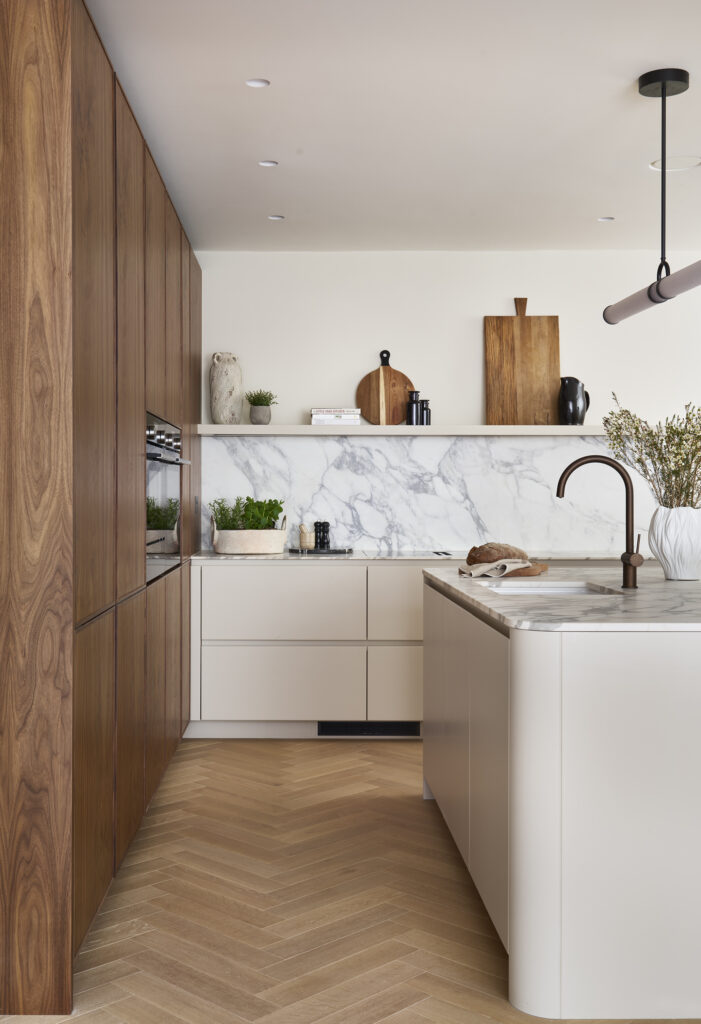
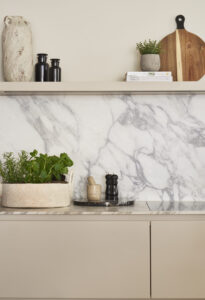
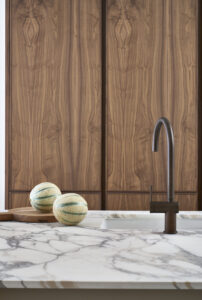
Porcelain worktops and splashbacks in Infinity’s Calacatta Magnifico bring the elegance of grey-veined marble with the durability and stain resistance required for a busy kitchen. An undermounted Shaws of Darwen fireclay sink is paired with a Gessi Inedito tap in Warm Bronze, while black glass Siemens ovens add depth and contrast. Together, these elements create a layered mix of materials that feels tactile and composed, rather than overly uniform.
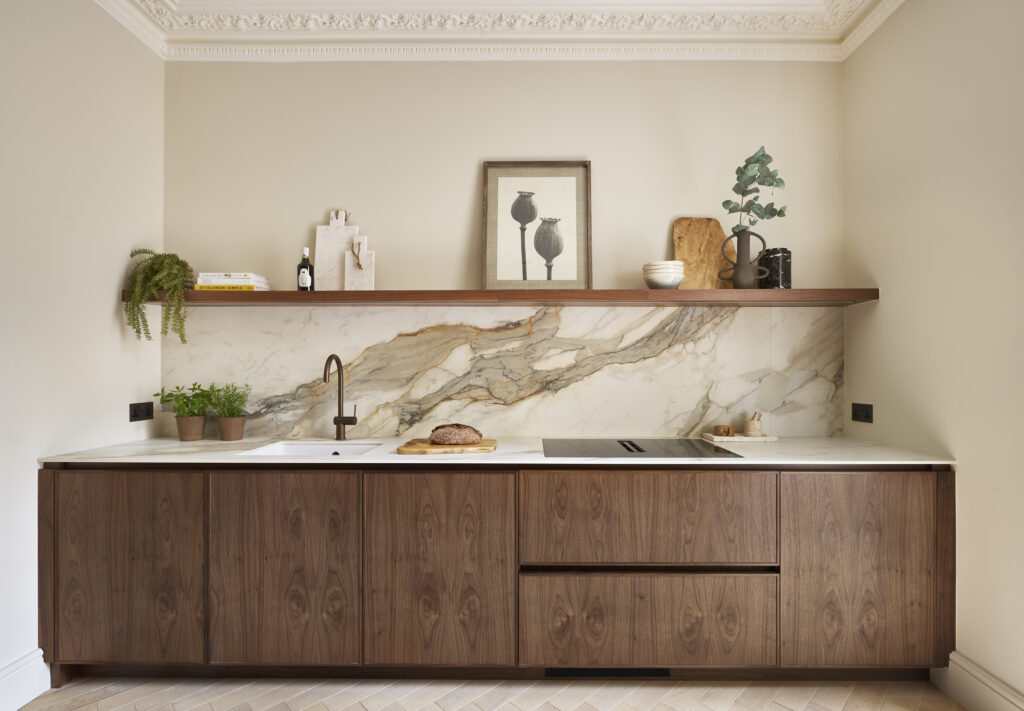
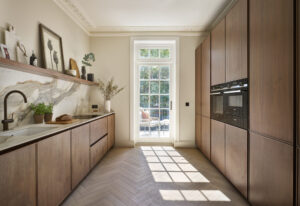
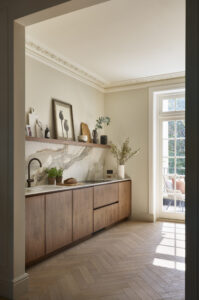
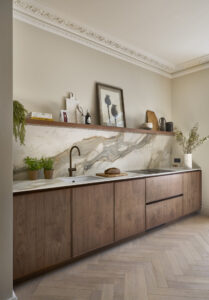
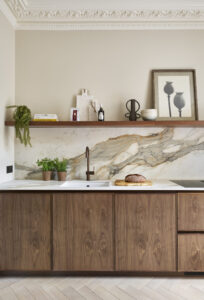
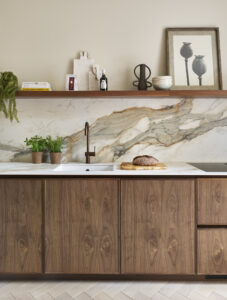
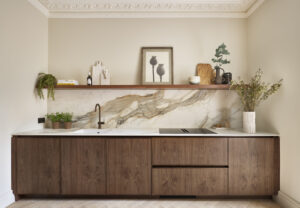
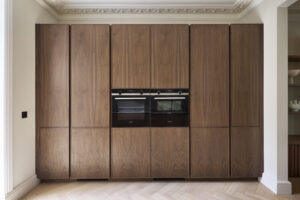
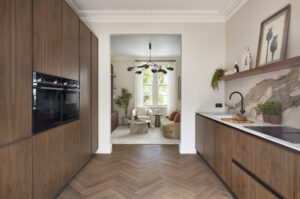
The second kitchen continues the walnut Micro Shaker cabinetry but introduces a different porcelain, Infinity’s Calacatta Hermitage, used across the worktops and splashback. Its dramatic copper and grey veining echoes the warmth of the timber and brings a sense of movement to the more compact space. Arranged in a practical galley layout, the kitchen includes a tall run of cabinetry housing Siemens built-in appliances alongside generous storage, balanced by a base run with sink and hob. A chunky walnut shelf frames the splashback, offering space to display personal pieces without overwhelming the room.
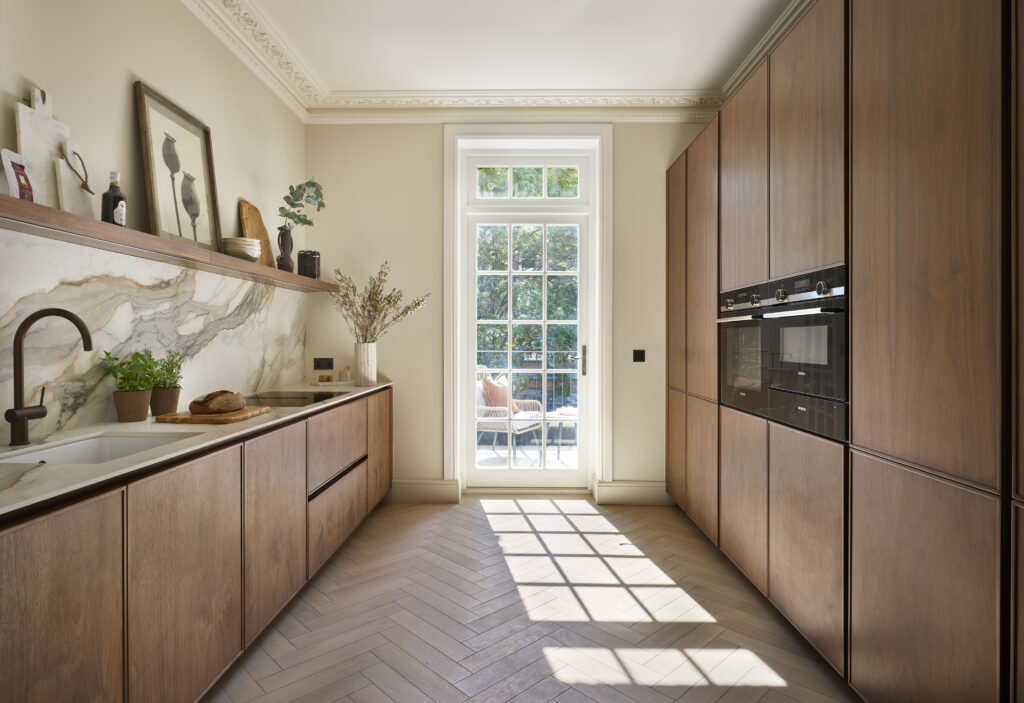
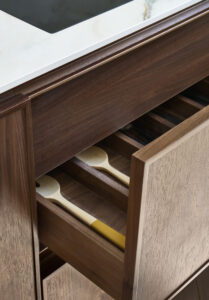
Natural light from the new roof terrace floods the second kitchen, enhancing the sense of openness despite its more slender proportions, while thoughtful internal storage details ensure everything has its place.
Together, the two kitchens form a considered response to modern living within a period home, each space carefully tailored yet clearly related. Grounded in craftsmanship and material quality, they support both everyday routines and larger gatherings, creating kitchens that feel current without chasing trends and easy to live with over time.

“Davonport was able to fully capture our brief to create kitchens that feel current, yet timeless. We are over the moon with the result