There are many appliances which are kitchen must-haves; a fridge, freezer and oven are absolute essentials. However, there are lots of other handy gadgets that you might not initially consider which will enhance your kitchen and make life a lot easier. One prime example of this is the humble warming drawer.
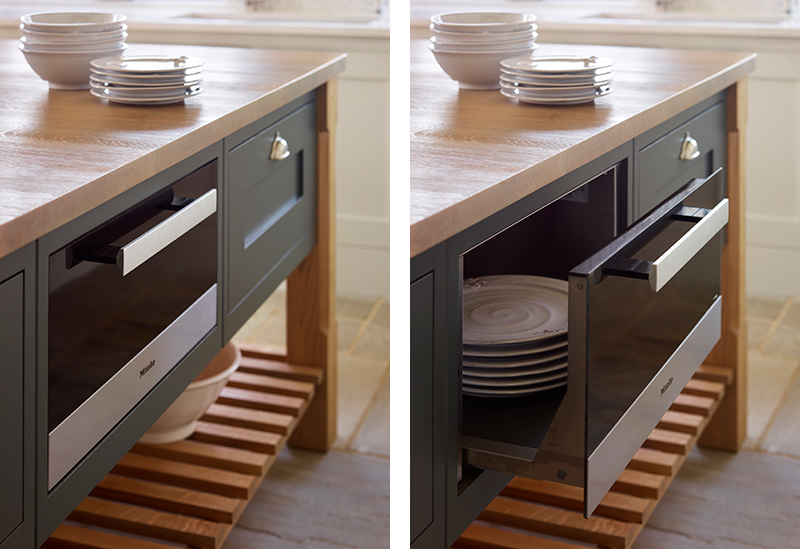
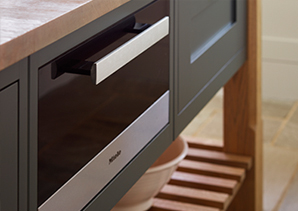
Despite having been available for years, warming drawers have only recently become popular amongst home cooks. Highly versatile, they can be used to help prepare and time meals, to warm crockery, or prove dough. They can even be used to defrost delicate foods or melt chocolate. Most have humidity controls so that food does not dry out if it’s plated and uncovered – unlike a conventional oven.
Generally there are two sizes of warming drawer; 140mm depth and 290mm depth. The shallower drawer is perfect for warming plates or can be used to warm cappuccino or espresso cups for example. The deeper warming drawer (sometimes referred to as a Sous Chef warming drawer) can be used in the same way as the shallow one, however it can also be used to heat larger pieces of crockery such as casserole dishes and can even be used to slow cook food such as joints or casseroles.
Thanks to their function, warming drawers are most commonly placed next to or underneath ovens, but they can be placed elsewhere, such as on an island. However, it’s important to think practicality when it comes to placement; positioning it within arm’s reach of the oven will prevent hot food spillages if you’re planning on using it to keep food warm. Alternatively, if you decide on a shallower drawer to warm crockery and coffee cups, you may consider placing it near the dining space or close to your coffee machine. However, this needs careful consideration as plenty of cabinetry is needed around the warming drawer for wiring and ventilation, and access to electricity is required. Importantly, always make sure the warming drawer is positioned at a practical height; waist height is about right in most cases, so that dishes can be lifted out easily.
A warming drawer might seem like a luxury appliance, but many people who opt for one when re-designing their kitchen now wonder how they ever went without it. Not only does it do much more than you might expect, it uses less energy than a conventional oven and also frees up space for cooking – a real help when you’re entertaining.
Make sure you consider all the appliances for your kitchen early on and discuss your thoughts with your designer. Like most kitchen technology, warming drawers are very difficult to add later on – it’s not just a case of removing a drawer and putting in a warming drawer; the dimensions often differ and there are more complex issues with fitting them. Therefore, it’s best to think about including a warming drawer early on in the design process so it can be integrated into the wider design from the outset. If you would like help or advice on including a warming drawer in your kitchen, please get in touch.